

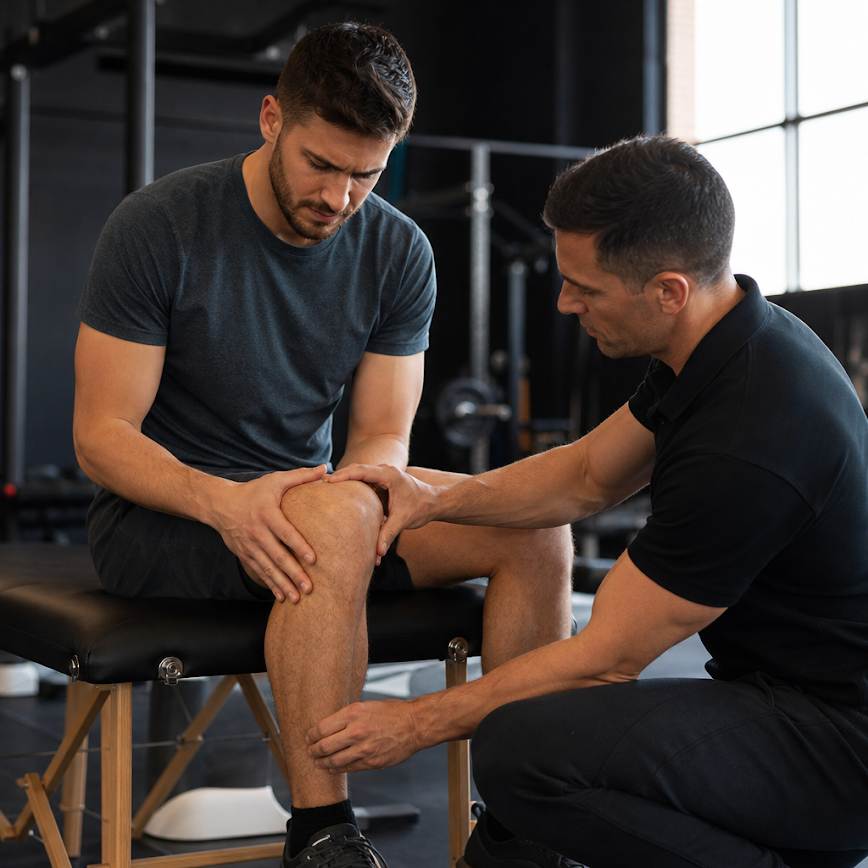
Whether you’re training for a marathon, hitting the gym five days a week, or playing recreational sports on weekends, training injuries can derail your progress and leave you frustrated. The good news is that most sports-related injuries are preventable with the right knowledge and approach. Understanding how these injuries happen, recognizing early warning signs, and knowing when to seek professional help can make the difference between a minor setback and months on the sidelines.
The Most Common Training Injuries and Why They Happen
Overuse injuries account for nearly half of all sports-related problems in adult athletes. Unlike acute injuries from a single traumatic event, overuse injuries develop gradually when repetitive stress exceeds the body’s ability to repair itself. Runner’s knee, shin splints, tennis elbow, and rotator cuff tendinitis all fall into this category.
The root causes are often interconnected. Training volume that increases too quickly is a primary culprit—jumping from 15 to 30 miles per week in running, for instance, overwhelms tendons and muscles that need time to adapt. Poor biomechanics compound the problem. A slight inward collapse of the knee during running might seem insignificant, but over thousands of repetitions, it creates excessive stress on the patellofemoral joint. Muscle imbalances, where certain muscle groups are significantly stronger than their opposing pairs, pull joints out of optimal alignment and alter movement patterns.
Acute injuries like ankle sprains, muscle strains, and ligament tears typically result from sudden forces or awkward movements. These are harder to predict but not impossible to reduce through proper preparation and technique refinement.
Building a Foundation for Injury Prevention
Prevention starts with progressive loading. The ten percent rule—increasing training volume by no more than ten percent per week—provides a reasonable guideline, though individual tolerance varies. Listen to your body’s feedback. Persistent soreness that doesn’t resolve with rest, pain that changes your gait or form, and discomfort that worsens during activity are all red flags that demand attention.
Strength training deserves equal priority with your primary sport. For runners, that means strengthening the glutes, hip stabilizers, and core muscles that control leg alignment. For tennis players, rotator cuff exercises and scapular stabilization work protect the shoulder. The principle holds across all activities: identify the muscles that support your movement patterns and work them systematically.
Mobility work often gets neglected, but adequate range of motion is non-negotiable for healthy movement. Tight hip flexors alter pelvic position and affect everything downstream. Limited ankle dorsiflexion forces compensations up the kinetic chain. A consistent mobility routine—even 10 minutes daily—pays dividends in injury prevention and performance. Maintaining overall health through proper nutrition, adequate sleep, and stress management also plays a crucial role in tissue repair and injury resistance.
Recognizing When You Need Professional Assessment
Many athletes make the mistake of pushing through pain, hoping it will resolve on its own. While some minor discomfort is normal during training adaptation, certain symptoms warrant immediate professional evaluation. Pain that persists beyond 72 hours, swelling that doesn’t respond to rest and ice, inability to bear weight or perform normal movements, and pain that forces you to alter your technique all require expert assessment.
Sports medicine specialists bring a unique perspective that bridges orthopedics, rehabilitation, and performance optimization. They understand the biomechanics of athletic movement and can identify subtle dysfunctions before they become serious problems. For athletes training in Dubai, consulting a sports medicine doctor dubai provides access to comprehensive evaluation including movement analysis, diagnostic imaging when needed, and evidence-based treatment protocols tailored to your specific sport and goals. These specialists can distinguish between injuries that require rest, those that benefit from modified training, and rare cases that need surgical intervention.
What to Expect During a Sports Medicine Evaluation
A thorough sports medicine assessment goes beyond identifying the injured structure. The specialist will examine your movement patterns, test muscle strength and flexibility, assess joint stability, and consider your training history and goals. This comprehensive approach reveals underlying factors that contributed to the injury, not just the symptoms. Treatment recommendations might include physical therapy, modified training protocols, technique adjustments, or in some cases, procedures like platelet-rich plasma injections for chronic tendon issues.
Evidence-Based Recovery Strategies
Recovery from training injuries has evolved significantly. Complete rest is rarely the answer. Research shows that appropriate loading during healing promotes better tissue regeneration than immobilization. The key is finding the sweet spot—enough activity to stimulate healing without aggravating the injury.
For most soft tissue injuries, the acute phase lasts 48-72 hours. During this window, managing inflammation through ice, compression, and elevation remains valid. After this initial period, the focus shifts to promoting blood flow and beginning gentle movement. The concept of relative rest means avoiding activities that provoke pain while maintaining fitness through alternative exercises. A runner with Achilles tendinitis might substitute cycling or swimming to maintain cardiovascular conditioning while the tendon heals.
Progressive loading follows a logical sequence: pain-free range of motion first, then strength development, followed by sport-specific movements, and finally return to full activity. Rushing any stage increases reinjury risk substantially. Recent research on healthcare delivery models emphasizes the importance of coordinated, multidisciplinary care for optimal outcomes in treating athletic injuries.
The Mental Side of Injury Recovery
Injuries challenge athletes psychologically as much as physically. The frustration of watching fitness decline, anxiety about reinjury upon return, and loss of identity for those who define themselves through their sport create genuine emotional distress. Acknowledging these feelings rather than dismissing them is the first step toward constructive coping.
Setting process-oriented goals during recovery maintains motivation. Instead of fixating on when you’ll return to competition, focus on completing rehabilitation exercises consistently, improving range of motion measurements, or mastering corrective movement patterns. These achievable milestones provide a sense of progress and control.
Returning to Training Safely
The return to sport requires patience and structure. Begin with 50 percent of your previous training volume, even if you feel capable of more. Monitor your response over several days before increasing load. Pain is the primary guide—any discomfort beyond mild muscle soreness signals you’re progressing too quickly.
Address the factors that contributed to the original injury. If biomechanical issues played a role, work with a physical therapist or coach to refine your technique. If training errors were responsible, design a more sensible progression. Athletes who return without addressing root causes face reinjury rates exceeding 50 percent within the first year.
Training injuries are frustrating but rarely insurmountable. With proper prevention strategies, timely professional intervention when needed, and disciplined rehabilitation, most athletes return stronger and more resilient than before. The key is respecting the process and recognizing that sustainable athletic performance requires balancing ambition with intelligent recovery.