

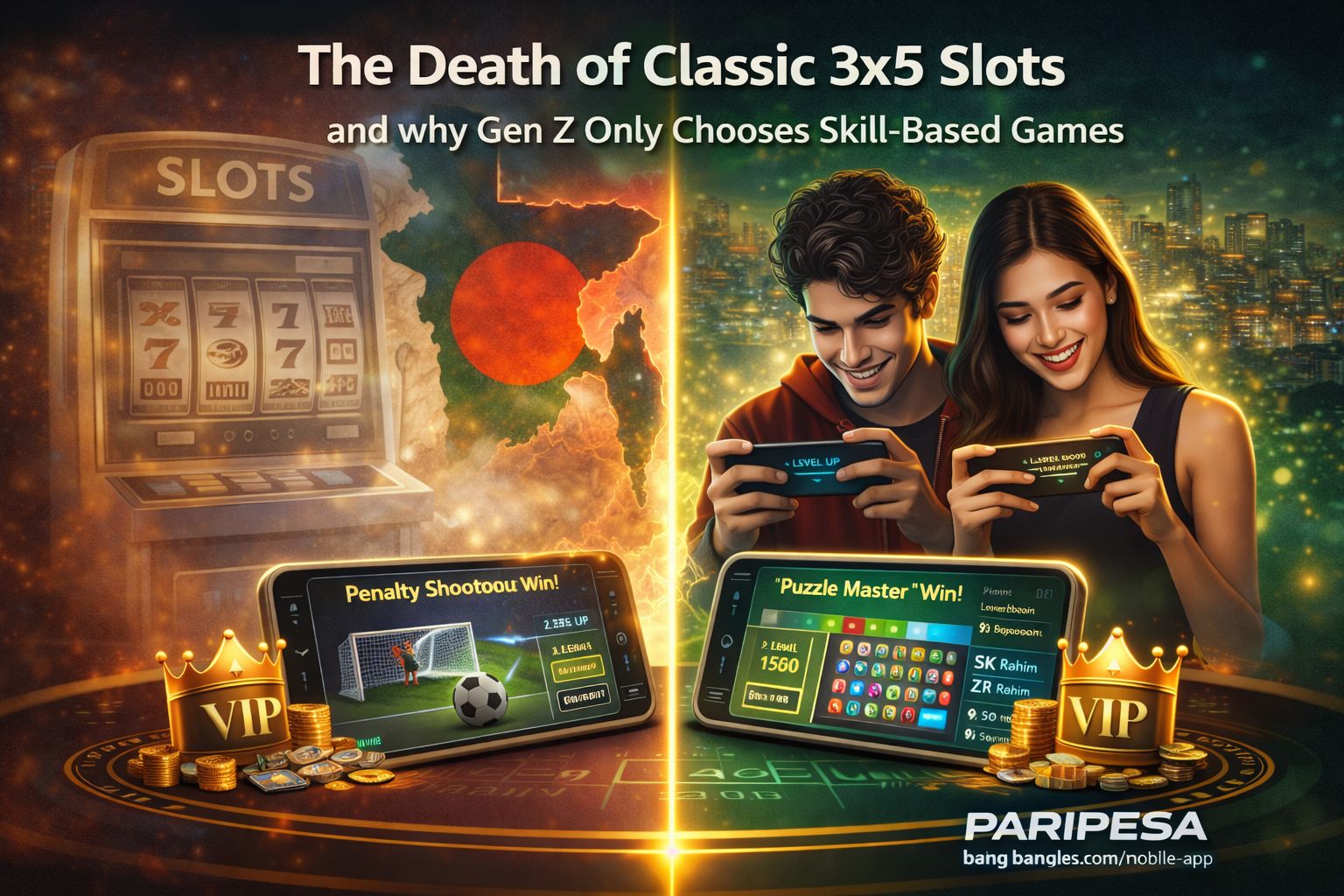
The gambling landscape is undergoing a seismic shift as younger demographics move away from traditional chance-based mechanics toward interactive experiences. If you look at the current market trends, it becomes clear that many operators are struggling to maintain engagement without integrating Paripesa apk into their digital ecosystem, particularly in fast-growing mobile-first markets such as Bangladesh. Generation Z grew up with complex video games and rewards systems that prize agency over luck. This generation views the repetitive nature of spinning reels as a relic of the past because it lacks the competitive edge they crave.
The fundamental shift toward player agency and interactive entertainment
The transition from passive observation to active participation defines the modern gaming era. Traditional machines rely on a random number generator that dictates every outcome without any input from the user. For a generation raised on high-stakes multiplayer battles, this lack of control feels unrewarding and transparently rigged. They prefer RNG-integrated skill games where their reflexes or decision-making speed can influence the final payout. This demand for gamification in gambling has forced developers to rethink how they build digital products. Instead of simple animations, we now see arcade-style betting mechanics that mirror the complexity of mobile apps.
Comparing traditional slots with modern skill-based alternatives
The following table highlights the core differences between the legacy systems and the new wave of interactive products that dominate the current market.
| Feature | Classic 3×5 slots | Skill-based games |
| Core mechanic | Pure chance | Strategy and skill |
| User engagement | Passive viewing | Active participation |
| Difficulty curve | Non-existent | Progressive levels |
| Social aspect | Isolated play | Multiplayer features |
| Reward system | Fixed paytable | Performance bonuses |
Developers are now focusing on provably fair algorithms to build trust with a tech-savvy audience. These players do not just want to win, they want to know that their player return percentage is affected by their own actions. The introduction of multiplayer wagering environments allows for a social experience that traditional slots simply cannot provide.
Why the psychological profile of Gen Z demands more than luck
Younger players prioritize the dopamine hit from mastery rather than just the financial gain. They are looking for immersive casino experiences that feel like a hobby rather than a gamble. This is why crash games and electronic sports betting have seen such a massive surge in popularity. The sense of timing and the ability to exit a bet at the right moment provides a rush that a spinning reel never could. Furthermore, blockchain gaming integration allows these users to own their assets and verify every transaction on a public ledger.
The market data suggests several key drivers for this change.
- Players want to see their names on a global leaderboard to satisfy their competitive nature.
- The inclusion of leveling systems provides a sense of long-term progression that keeps users returning.
- Customizable avatars and skins offer a layer of personal expression within the gambling environment.
- Real-time chat functions allow for the formation of communities around specific game titles.
- Bonus rounds that require physical dexterity create a more engaging loop than clicking a button.
Financial metrics and the future of the igaming industry
Investment is flowing into hybrid gaming models that combine the best parts of video games with monetary rewards. The average revenue per user is often higher in skill-based titles because the sessions last longer. When a player feels they can improve, they are more likely to spend time practicing and refining their approach. This shift is not just a trend but a total paradigm shift in digital wagering.
| Metric | Traditional slots performance | Skill-based growth rates |
| Session length | Lower engagement time | High retention rates |
| Audience age | Primarily 45 plus | Range 18 to 35 |
| Market share | Declining annually | Rapidly expanding |
| Platform focus | Desktop and physical | Mobile first design |
As we move forward, virtual reality gambling will likely bridge the gap even further by offering a fully realized world where players can interact with the environment. The focus will remain on user-centric design and providing a fair chance for the talented to rise to the top.
FAQ
What are the main benefits of skill based games for younger players?
These games provide a sense of control and accomplishment that traditional slots lack by rewarding practice and strategic thinking. Gen Z values the ability to influence the outcome of a session rather than relying entirely on a hidden mathematical formula.
How do operators ensure fairness in games that require skill?
Companies use certified software that balances player input with mathematical boundaries to ensure the house maintains a sustainable margin. Most modern platforms now display their logic through transparent data sets or cryptographic verification methods to maintain credibility.
Is the classic slot machine going to disappear completely?
While classic slots still have a loyal following among older generations, their dominance is fading as the primary revenue driver for online platforms. They will likely exist as a niche product while interactive and skill-focused titles become the new industry standard.